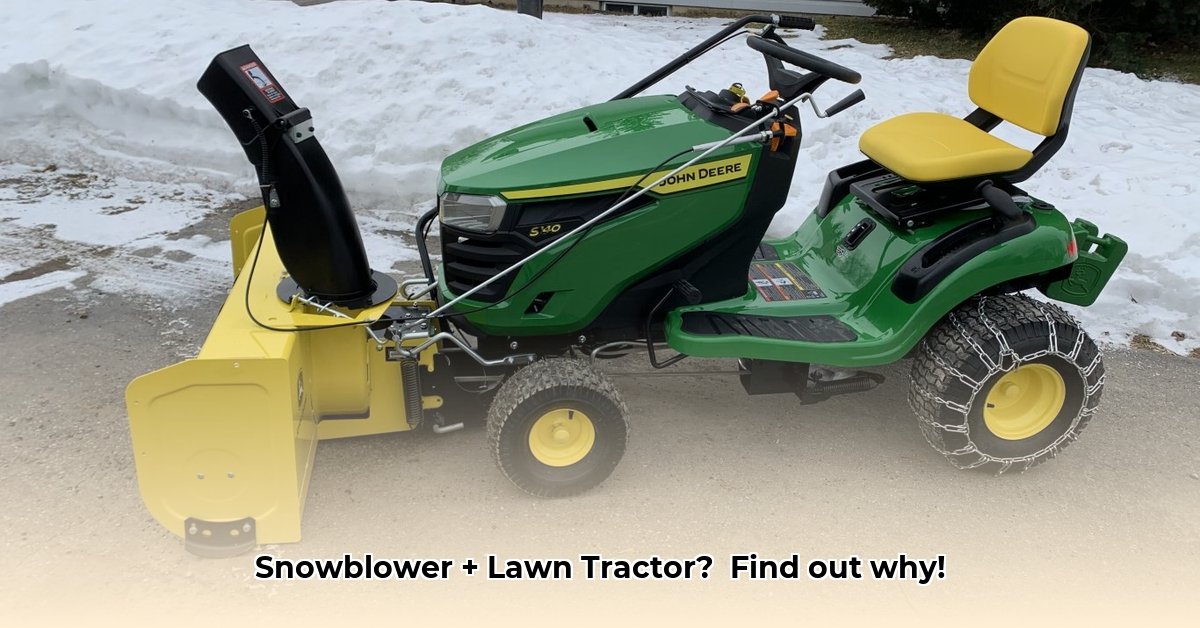
Choosing the right snow blower attachment for your lawn tractor can transform a winter chore into a manageable task. This guide provides a step-by-step process to ensure you select the perfect snow-clearing solution for your needs and your tractor's capabilities. We'll cover everything from assessing your tractor's power to understanding different snow blower types and ensuring safe operation. For more information on Cub Cadet attachments, check out this helpful resource.
Step 1: Assessing Your Tractor's Capabilities
Before you even begin browsing snow blowers, you must determine your lawn tractor's power capabilities. The critical specification is the Power Take-Off (PTO) horsepower – essentially, your tractor's snow-blowing "muscle." This information is usually in your tractor's owner's manual or on a data plate affixed to the tractor itself. Why is PTO horsepower so crucial? Overpowering a snow blower can damage both the blower and your tractor. Underpowering it will lead to inefficiency and frustration.
Finding Your Tractor's PTO HP: Consult your owner's manual. If you can't locate it there, check for a metal plate near the engine. The PTO HP rating will be clearly marked.
Matching Tractor Power to Blower Size: A poorly matched combination will lead to a less effective snow removal process, at best. At worst, this mismatch can damage your equipment. The following table provides general guidelines. Always consult your tractor's manual for specific recommendations:
| Tractor PTO Horsepower | Suitable Snow Blower Width (inches) | Snow Conditions |
|---|---|---|
| 10-15 HP | 42-48 | Light to moderate snow |
| 15-20 HP | 48-54 | Heavier snowfalls |
| 20+ HP | 54+ | Heavy snow, large areas |
Step 2: Analyzing Your Snow Conditions
Snow type significantly impacts snow blower selection. Heavy, wet snow requires a different approach than light, fluffy powder.
Light, fluffy snow: A single-stage snow blower, which uses a single auger to both ingest and discharge snow, is usually sufficient. These are generally less expensive and simpler to maintain.
Heavy, wet snow: For this, a two-stage or three-stage blower is necessary. These utilize an auger to grind snow and an impeller to throw it, enabling them to handle denser snow.
Deep snow: Deep snowdrifts necessitate a snow blower with a wider clearing width for efficient removal. Consider a larger model and higher PTO horsepower if you frequently deal with deep snow.
Step 3: Choosing the Right Blower Size and Features
Selecting the right snow blower involves considering several key factors:
Clearing Width: This is the horizontal width the blower clears in a single pass. A wider width means fewer passes, but also requires more power from your tractor. Consider the size of your driveway and the typical snowfall amounts.
Throw Distance: This is how far the snow is projected. A longer throw distance is helpful for moving snow far away, but it also consumes more power. Shorter throw distances are often more practical in close quarters or windy conditions.
Stages (Single, Dual, Tri-Stage): As discussed earlier, this depends on your snow conditions. Single-stage for light snow, two-stage for moderate to heavy, and three-stage for extremely heavy snow.
Material: Steel construction is generally more durable, though often heavier. Polymer blends offer a lighter-weight option, but may not last as long under heavy use.
Additional Features: Consider features like adjustable chutes, headlights, and electric lift systems to improve ease of use and convenience.
Here's a hypothetical comparison table (replace with actual models and specifications):
| Model | Width (in) | Throw Distance (ft) | Stages | Material | Price Range ($) | PTO HP Requirement |
|---|---|---|---|---|---|---|
| Acme SnowPro 50 | 50 | 30 | 2 | Steel | 1000-1500 | 15-20 |
| Beta Blizzard 42 | 42 | 25 | 1 | Polymer Blend | 700-1000 | 10-15 |
| Gamma Frostbite 60 | 60 | 40 | 3 | Heavy-Duty Steel | 1800-2500 | 25+ |
Step 4: Installation and Maintenance
Always follow the manufacturer's instructions for installation. Regular maintenance is crucial for optimal snow blower performance and longevity. This includes lubricating moving parts, sharpening the blades, and routinely inspecting components for wear and tear. Preventative maintenance saves you time and money in the long run.
Step 5: Safety Precautions
Safety is paramount when operating any power equipment. Always wear appropriate safety gear, including eye protection, gloves, and sturdy footwear. Keep children and pets away from the operating area. Never operate the snow blower if you're fatigued or under the influence of substances impairing your judgment.
Choosing the right snow blower for your lawn tractor is a significant investment. By carefully considering your tractor's capabilities, typical snowfall conditions, and desired features, you can select a snow blower that will effectively and safely clear your driveway for many winters to come.